Details
Conception: David Duclos
Director/Choreographer: Hillar Liitoja
Cast: Viv Moore, Katherine Duncanson, Magdalena Vasko, Jasmine Ellis, 2 additional dancers
Venue: Undisclosed location,
top story, Waterfront Toronto Skyscraper
Production dates: ~June 21
to July 13, 2005
Photos
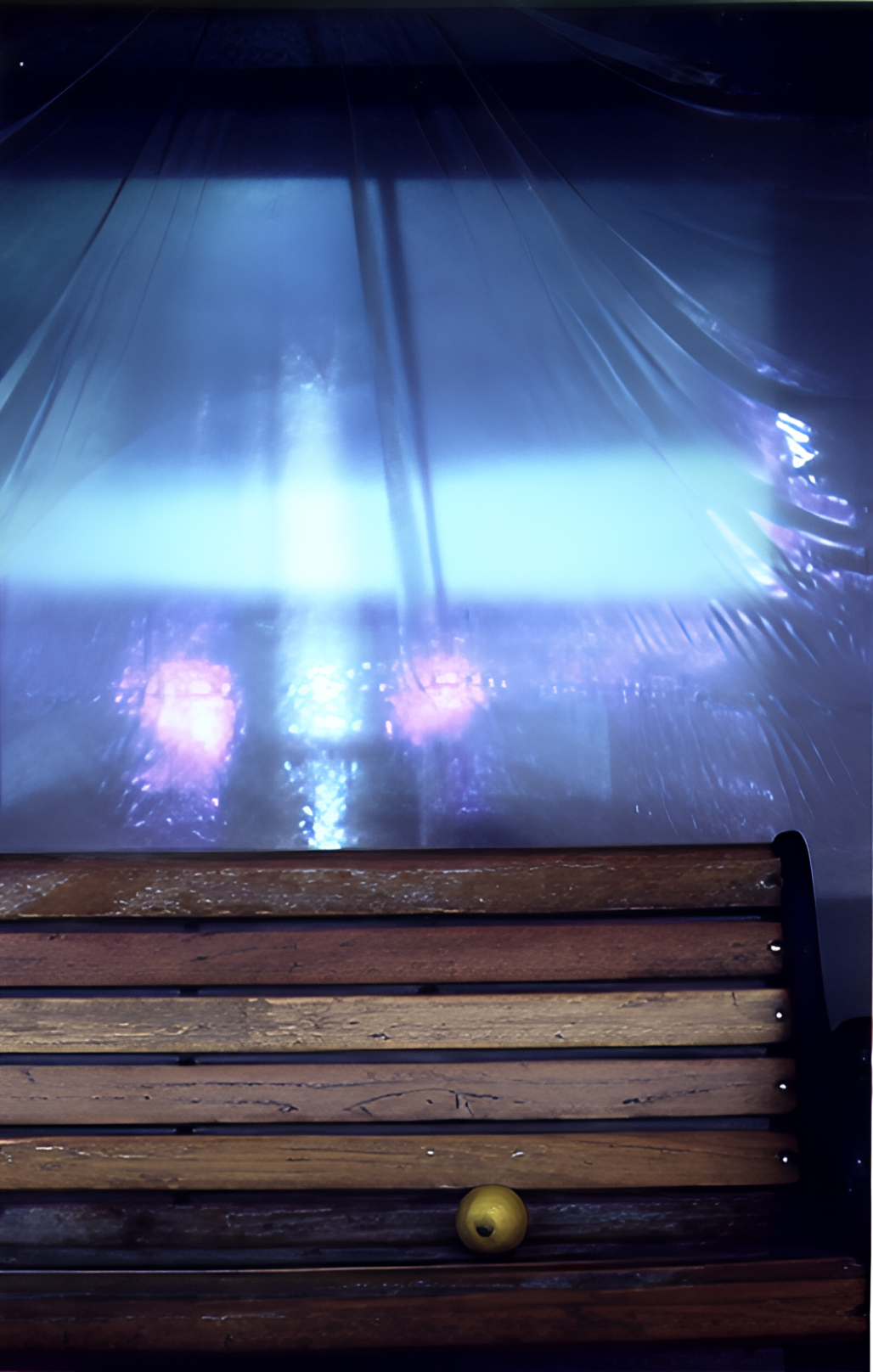
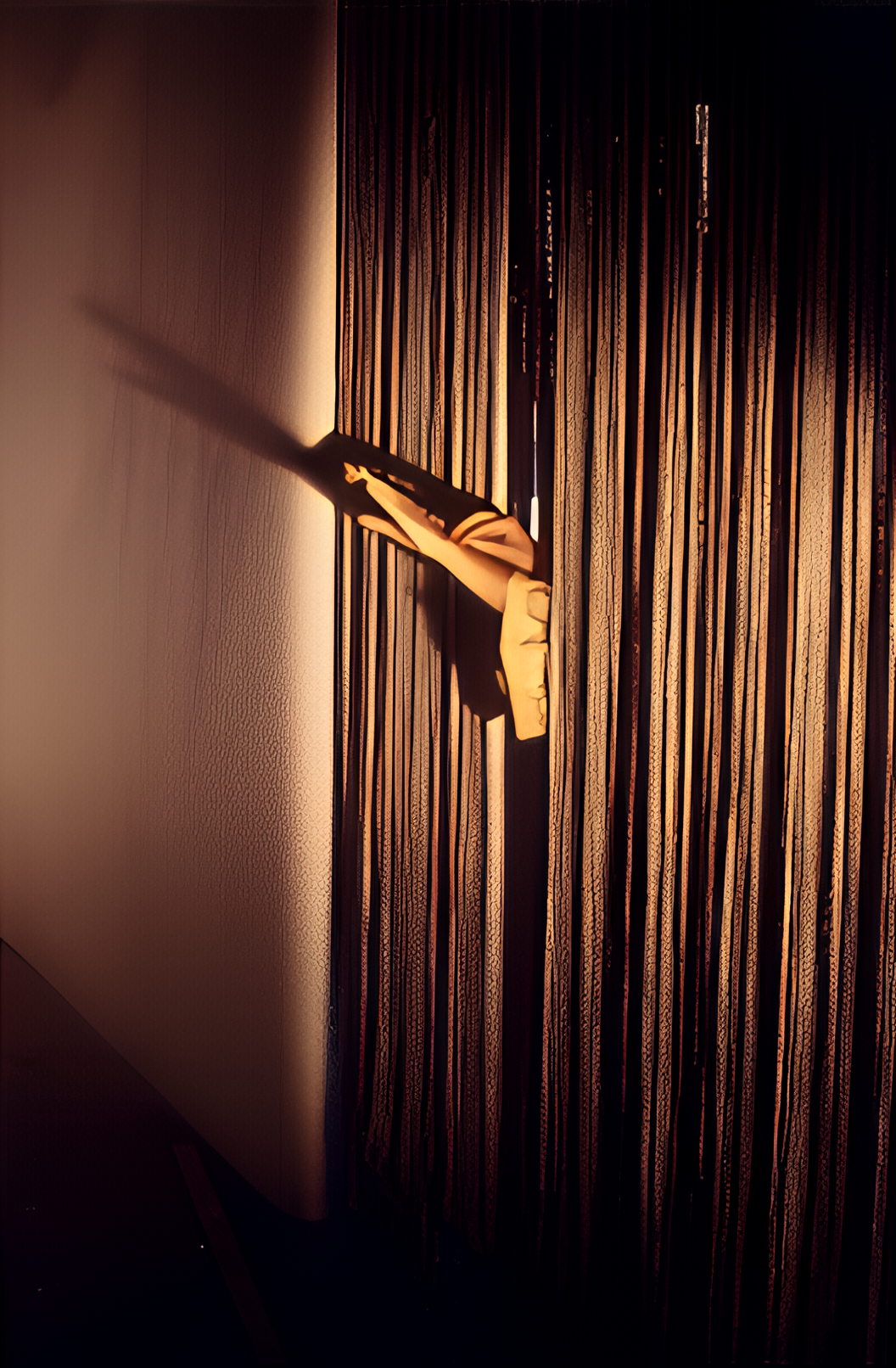
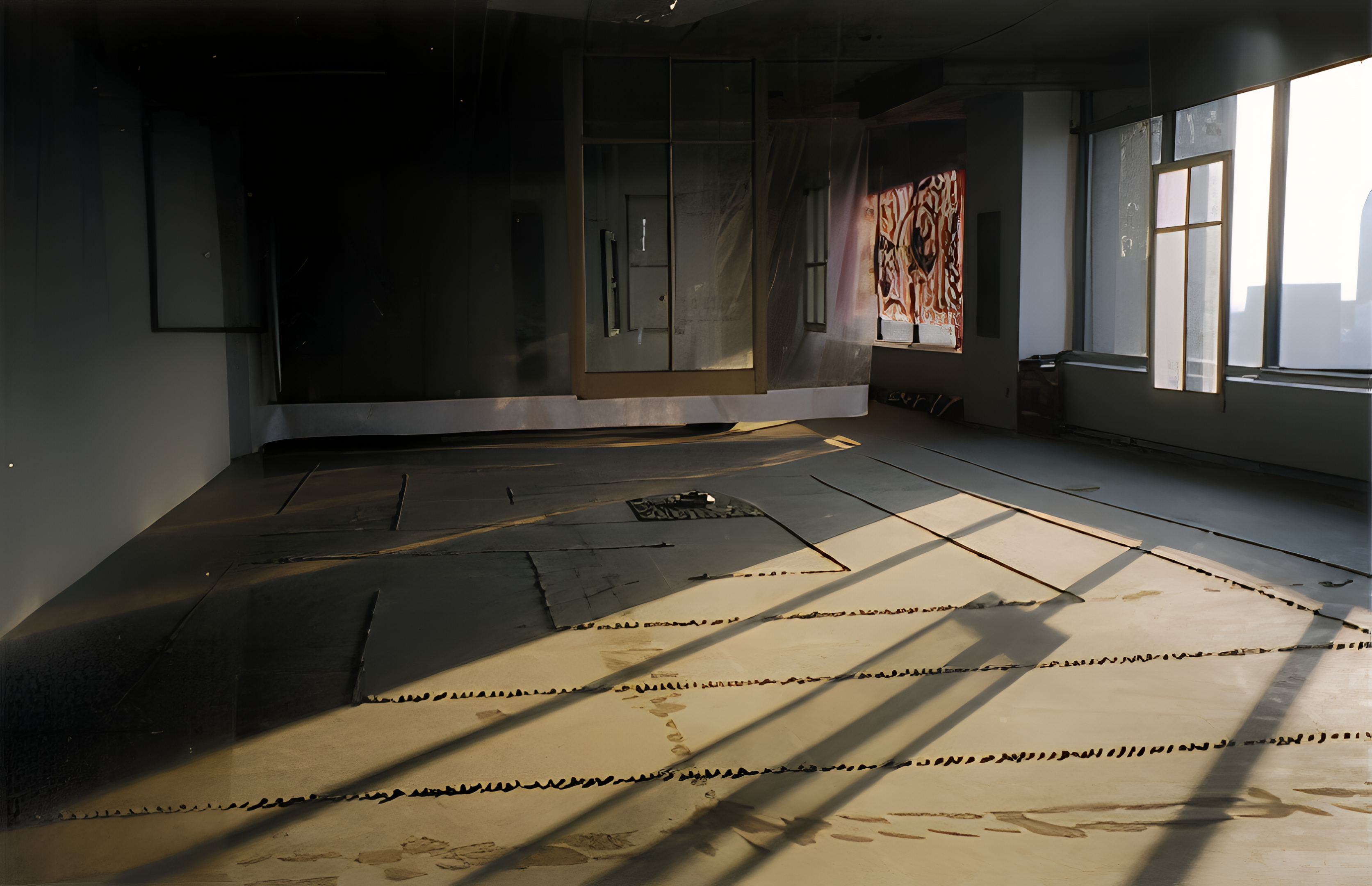
Reviews
Through a Glass Brightly
DNA Theatre does it again - creates something that is not quite visual art, not quite theatre, but all experience. Book a reservation for their new show The Large Glass, which takes place in the magic hours of sunset to dark, on the top floor of a waterfront skyscraper. What you will find there is a meditation on love and marriage and romance and bondage and all our images about couplehood and more, inspired by the idea of a young bride posing for a portrait. Between the digital projections, paintings, dance and movement, both you and the construction zone environment pecome part of the art. It will surprise, confuse, startle, provoke, and amuse you, and even if you hate it, it will give you something to talk about. A rare and unusual half hour at the top of the city, unlike any magical sunset evening you're ever likely to experience in the city. Just go. (If nothing else, you'll get to see a great view!)
CBC Radio - Here and Now
June 21, 2005
DNA Theatre - "The Large Glass"
The latest experimental show of DNA Theatre is called The Large Glass and is a multidisciplinary: installation where the audience passes through created rooms one at a time carved out of the empty space of an office tower. The creative team of theatre, dance and visual artists, were given the premise of the "fuiyam" portrait. Apparently, in early Christian Egypt, brides had their portraits painted, and when they died, these were put in their tombs.
Some creators included people in their mix like a wandering waif who offers wine, or a kitten with a whip. Others fashioned visual and sensory displays. All in all, it is an experiential affair, set against the dramatic backdrop of a modern cityscape, which provocatively asks the question - just how much has the role of women really changed over the centuries? The installation is as disturbing as it is intriguing.
CLASSICAL 96.3FM
June 29, 2005
Bridal Bonds
There's no happily ever after for the women in The Large Glass, a DNA production conceived by David Duclos, who also did set and lighting design. A dark meditation on marriage, the interactive piece was staged on the 24th floor of a downtown office building, an open space divided into playing areas by plastic sheets, blue lights and suspended drinking glasses.
None of the female characters seemed content with her lot. One nervous woman who ran from contact with anyone seemed about to be given away in an arranged marriage; another (the always splendid Viv Moore) was behind a gauzy screen, dancing out her frustrations while cracking a bullwhip. A third hid behind her erotic paintings, while another (Katherine Duncanson), trapped within a cat's cradle of red string, played simple, untroubled melodies on a keyboard.
The show's meaning was open to each viewer's interpretation; wandering one at a time through the various rooms, we had no other audience members with whom to share the experience. I left analysis behind and focused on sensual and playful impressions, several of which I was encouraged to create myself.
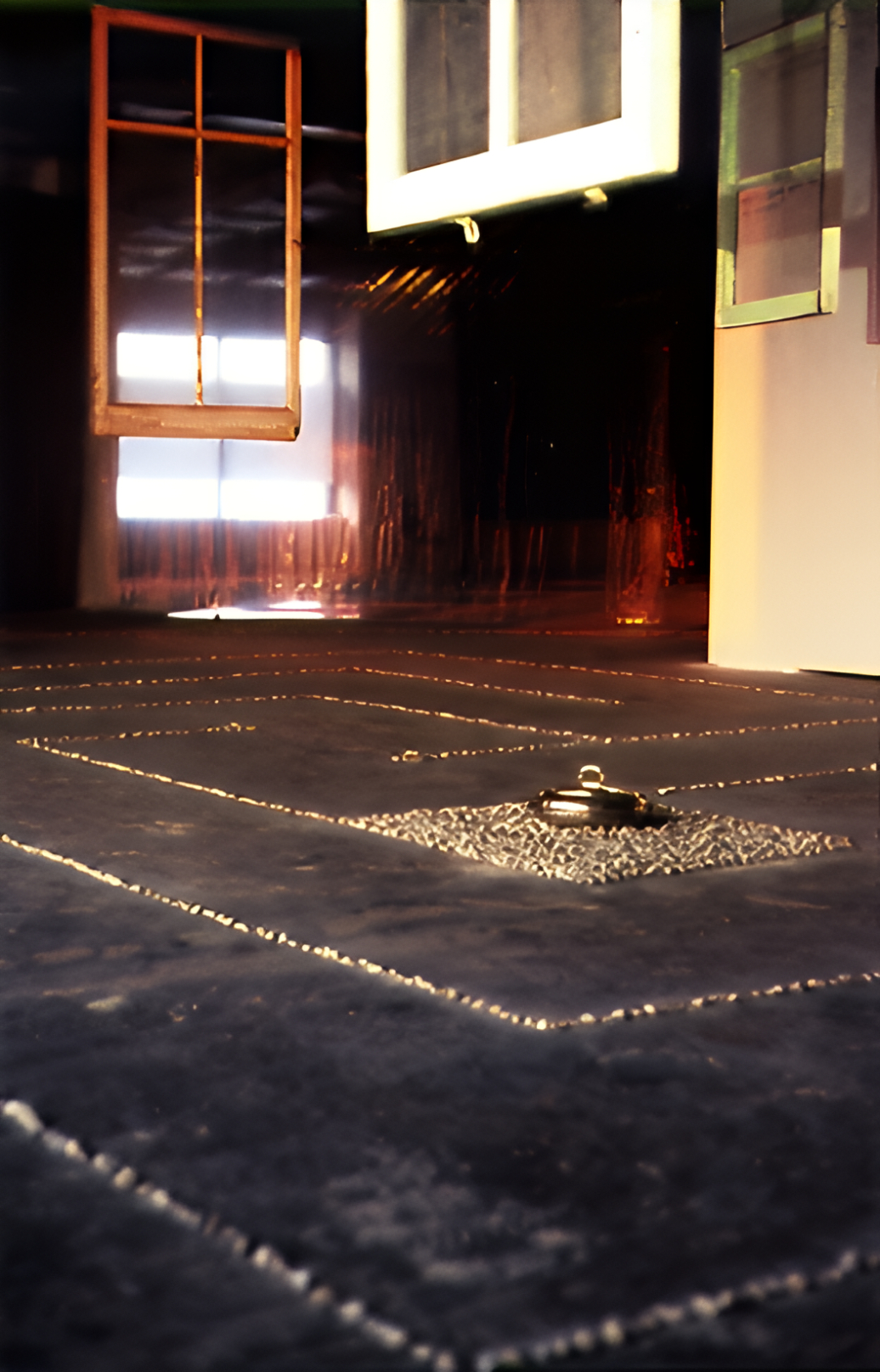
Some of the strongest? Walking a maze created by pebbles in a room hung with windows on which text was written; playing in a flickering light designed to throw kaleidoscopic, reversed shadow images of my hands and body on a blank wall; seductive hands beckoning me through white curtains.
Not everything worked, but the evening - which also involved choreographer Hillar Liitoja, painter Natasha Doyon, playwright Sue Balint, sound designer Richard Windeyer and dancers Magdalena Vasko and Jasmine Ellis - left me with plenty of dreamlike images.
NOW Magazine
July 7-13, 2005
Through A Large Glass Darkly On 24th Floor Is Quite A Trip
Those well-versed in the visual art of the 20th century will recognize the title of DNA Theatre's installation, The Large Glass, as the parenthetical name for Marcel Duchamp's The Bride Stripped Bare by Her Bachelors, Even. The Duchamp piece has generated more puzzlement than any other artwork of its time and makes the ideal jumping-off place for DNA's Hillar Liitoja, whose theatrical practice is nothing if not vexingly enigmatic.
In this collaboration with theatre director David Duclos, sound designer Richard Windeyer and six female performers, DNA in effect extends the two-dimensional Duchamp into a three-dimensional work occupying the entire, glass-walled space on the 24th floor at I Yonge St. until tomorrow night. Visitors are invited to make reservations ahead of time (call 416-504-5099) and are admitted to the installation, one at a time at precise intervals, starting at sunset. (A voice message last night warned callers that all the viewing times have been booked.).
Duchamp worked eight years, from 1915 to 1923, on The Bride Stripped Bare until he pronounced it "definitively unfurnished." That's like an open invitation to succeeding generations of artists to complete or re-interpret his perplexing construction of two window-sized panes of glass stacked on top of each other. In the top is the cloud-like "bride," ~ below are her nine bachelors, configured as peculiar industrial-looking objects. According to critics who've attempted to decipher Duchamp's extensive notes, the artist was translating sexual desire into mechanical terms, for one thing, and having a lot of fun with the interplay of words and images.
The Large Glass on show here is reminiscent of previous DNA productions in which audience members were sternly ordered in one direction or another, sent in pursuit of the performers, or expelled from the theatre at the close of the action. Liitoja likes us to be aware of how theatre is a container in which we're at the mercy of another's imagination.
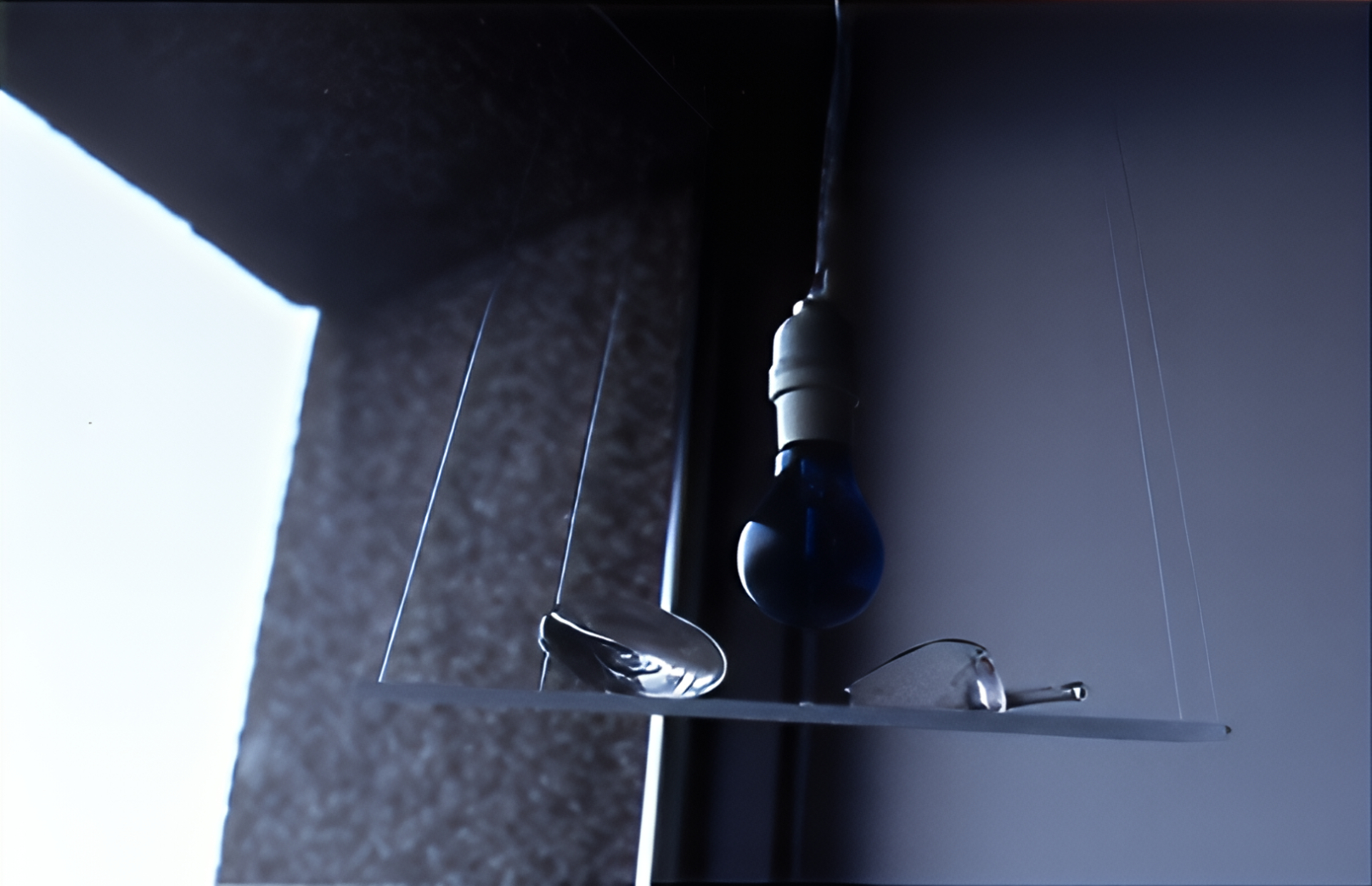
A stony-faced young attendant secures the elevator and hands the visitor a card with a note about a "fuyiam," a portrait of a bride-to-be that was kept on the walls of Egyptian households in the early Christian era and buried with her at her death. A male attendant, speaking only in single monosyllables, indicates a chair where the visitor waits, after depositing her belongings. One is allowed to enter each successive space only when a blue light bulb flashes and a bell sounds.
Inside the vacated office space is a labyrinth of chambers, created out of dividers of plastic sheeting, much of it transparent. In the first you watch a video of delicately gesturing hands. Snatches from a Marcel Duchamp lecture on the creative act, and the recitation of a marriage ceremony flow in and out of each space from concealed speakers. Other recitations occur throughout the half-hour journey, including poetry and text written by Duclos.
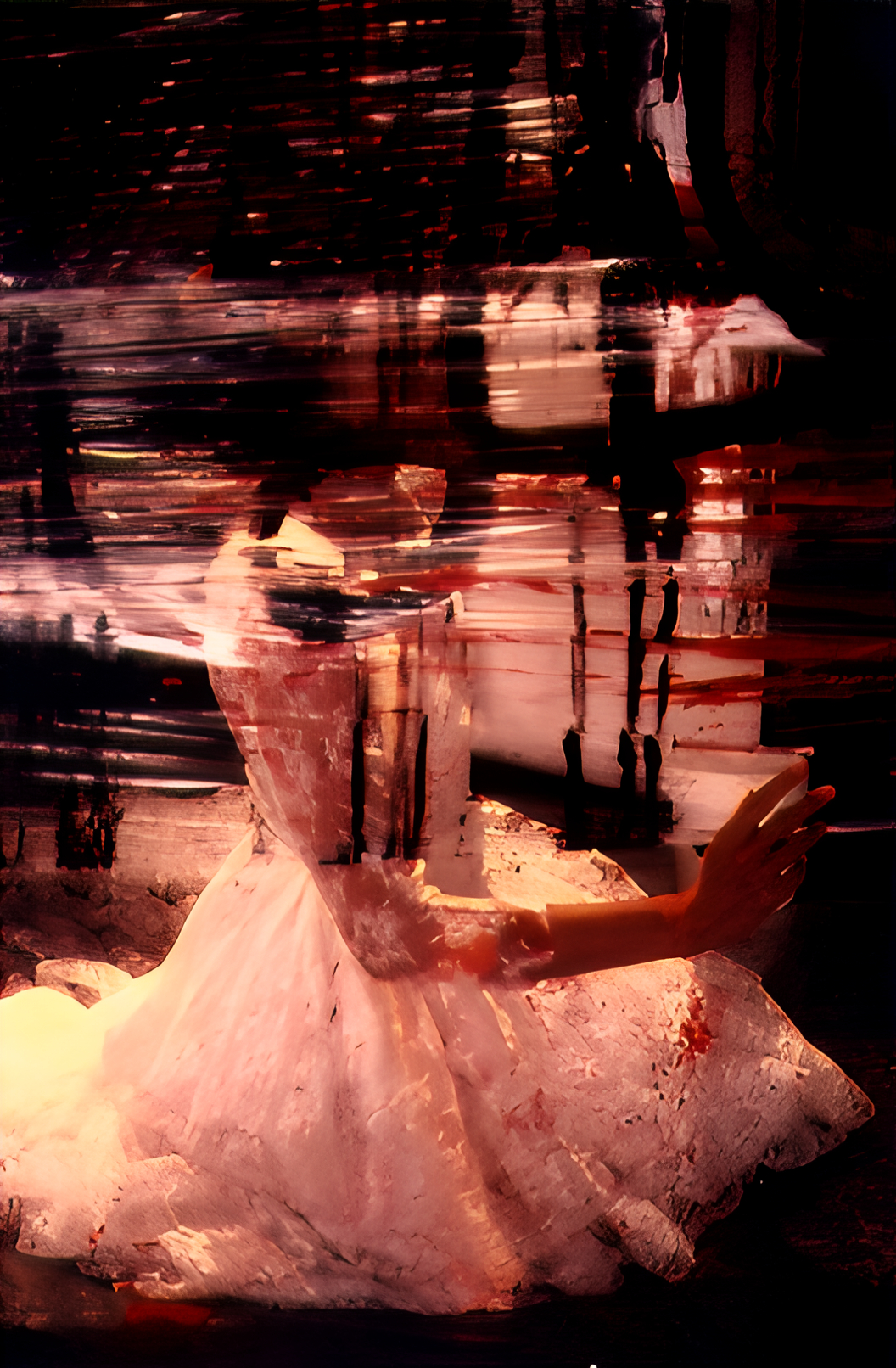
In the second chamber a dancer in a wedding dress is trapped between two sheets of transparent plastic wrap, like a living version of the bride pressed into Duchamp's glass. Using hands, feet and brush, she paints an abstract composition in red, white and black on both sides of her, obscuring herself with her own painting.
The third room contains windows hung over a maze outlined in pebbles. At the centre is a silver serving dish: a wedding present, perhaps.
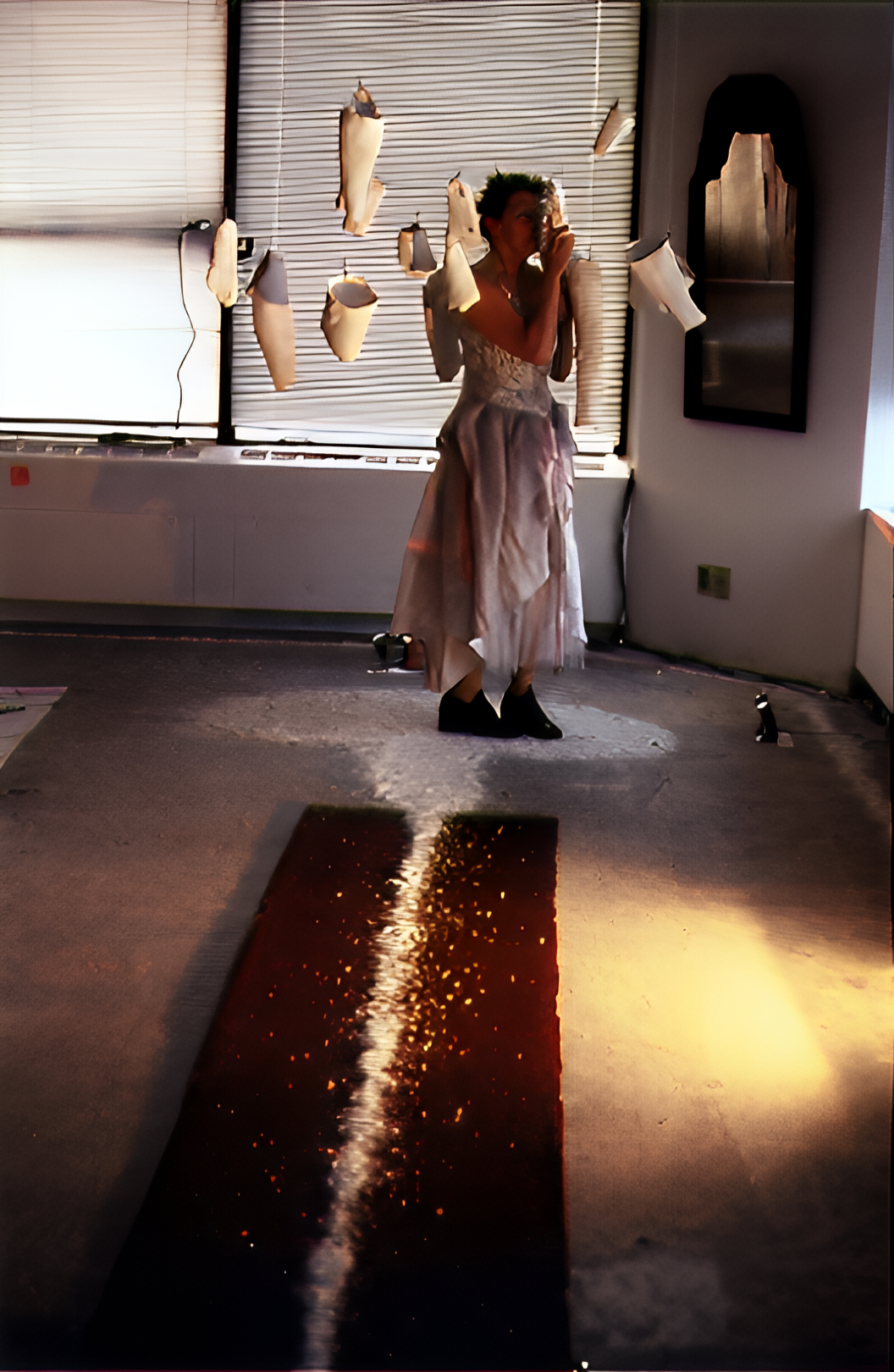
A second bride, Viv Moore, brandishes a bullwhip and snaps it loudly, then walks around the space in a pair of heavy, black old-lady shoes, pausing occasionally to view herself in the mirror or fondle a set of plaster-cast body parts hung like a mobile. Next comes a stile where the visitor might climb up and down and watch herself on a kaleidoscopic video projection. In a larger chamber nine proposals scrawled on large cards are hung above little paintings with images of love. Catherine Duncanson sits at the harpsichord caged in a web of red cords, singing old tunes. On the second of two visits, she hands out a note, which she says was given her by "Bachelor No.2," whom she refused.
The third, last, bride is the spookiest. An extremely thin young woman, garbed in a caftan, peers at you with soulful eyes and offers you food and drink, or a close-up look at the pictures in the ritualistically arrayed photos and memorabilia on the floor around her. She follows you to the door and stares at you as you enter the last chamber, where another dancer beckons through a string curtain. Being in the performer's space is threatening enough; being turned into the spectacle is downright unnerving.
Duchamp called his picture "hilarious" and there are elements of humour, too, in this Large Glass.
Duclos poses as a painter at his easel in a space beyond the plastic. A video camera pointed at the lake displays a previous day's views. The large cityscapes outside function as part of the installation, distracting us with views of real-time human activity below on the lake, on balconies and on the streets. But the makeshift quality of the whole production doesn't encourage one to take it seriously.
This installation is a continuous work-in-progress, changing daily and drawing the visitor back for a second experience. A Bluebeard's castle of forsaken brides, a series of tableaux-vivants suggestive of ancient tomb practices, or an empty office space as the artist's studio - however one wishes to interpret it, The Large Glass doesn't do much to alter our perspective on marriage, desire, or the creative process.
The Toronto Star
June 27, 2005